
Call Today on 08082508820 * or Book a Survey Online
Loft Insulation
Loft insulation is a simple and effective way to stop the heat escaping from your property and to reduce your heating bills.
Without loft insulation, the warm air in your home created when you turn on the heating is able to escape more easily, with over a quarter of heat generated within the home lost through uninsulated roof spaces.
Insulation is also very important to help stop condensation and mould problems, as uninsulated cold spots will cause moisture laden air to condense, creating damp patches. Over time these patches will allow mould spores to germinate.
Peter Cox will inspect roof spaces for adequate levels of insulation as part of our damp and timber surveys, and our surveyor may recommend insulation be topped up to improve thermal efficiency, help reduce heat loss and prevent condensation problems.
If necessary, Peter Cox will lay new insulation in most standard roof areas in most domestic properties, and can also top up insulation over the existing areas up to the recommended depth of 270mm.
If existing insulation is already in place but needs topping up we can install the new insulation at right angles over the existing, taking care not to block any existing intentional ventilation such as eaves ventilation, grilles or airbricks. Often incorrectly installed insulation that blocks ventilation can lead to damp and condensation problems, rather than preventing them. It is not unknown for mould to grow on loft timbers if eaves ventilation is blocked in this way.
What Is Loft Insulation and Why Is It Important?
Loft insulation is a layer of material, typically mineral wool or fibreglass, that reduces the rate at which heat is lost from your property through the loft space. It’s an important part of homes in the UK as it helps form a thermal barrier which can help improve the amount of heat retained inside during winter, while helping keep the property cool during summer.
In most homes the installation process typically involves rolls of insulation being laid between and over the ceiling joists.
Properties that already have insulation may not have the required levels necessary. The current recommended depth for standard mineral wool insulation is 270mm.
Why Should You Insulate Your Attic or Roof Space?
Insulating your loft is one of the quickest and easiest ways to improve the internal environment of your home, by keeping heat inside.
Homes in the United Kingdom vary in age, and because of this, many properties may not have been built with adequate insulation installed in attics, lofts and roof spaces.
Loft insulation is generally regarded as a sound investment as it can be effective for up to 40 years and will more than pay for itself in terms of energy savings over that time.
Long Term Benefits
-
Reduced Energy Bills - Loft insulation can help homeowners save on their energy bills. The Energy Savings Trust have estimated that you could save up to £250 on energy bills a year, by adding loft insulation to an uninsulated house, while loft insulation generally lasts for over 40 years.
-
Improve your EPC Rating - When selling or renting a property, every home must have an EPC (Energy Performance Certificate). The EPC rating is calculated based on the energy efficiency of your home. Loft insulation will help improve your EPC rating, and this can make your property more appealing to prospective buyers and tenants.
-
Environmental Benefits - Loft insulation means you will be using less energy and therefore less fuel. This will mean there will be a corresponding reduction in the amount of harmful chemicals and gases that are released from heating and cooling devices. In 2022, the Energy Saving Trust estimated that an uninsulated loft in a detached home once insulated to 270 mm thickness insulation could save 1310 kg CO2 per year.
Preventing Condensation and Mould on Ceilings
If your property is suffering from mould and condensation problems on ceilings during winter, this may indicate a problem with the thermal efficiency of the roof space above. Insulation provides a thermal barrier which prevents cold spots, but if insulation is missing, these spots can allow warm moist air to condense on the cold surface. Over time this can lead to mould growth.
Improving the insulation in the roof space above can stop the problem. If the mould on your ceiling is forming in straight patches, it is possible there are missing sections of insulation in between the joists in your loft.
Often this can be caused by work being carried out in the roof space where insulation was moved and has not been relaid correctly.
Insulation in the roof space will help remove the cold spot and therefore mould in this area, but you may need to take action to reduce the amount of moisture produced inside the property, and improve ventilation.
If you are concerned about a damp problem, a damp and timber survey carried out by a trained professional from Peter Cox can provide you with a detailed survey report outlining their findings, along with recommendations where necessary.
How to Stop Ghosting on Ceilings
Ghosting refers to dark, linear stains that form on walls and ceilings which is created by airborne dust circulating in the property sticking to colder spots. Ghosting indicates a problem with the thermal properties of the surface, which may need to be improved.
Better air circulation and ventilation in the property will also help prevent ghosting on ceilings. These patches can be wiped away, but unless thermal improvements are made to the surface, they could return.
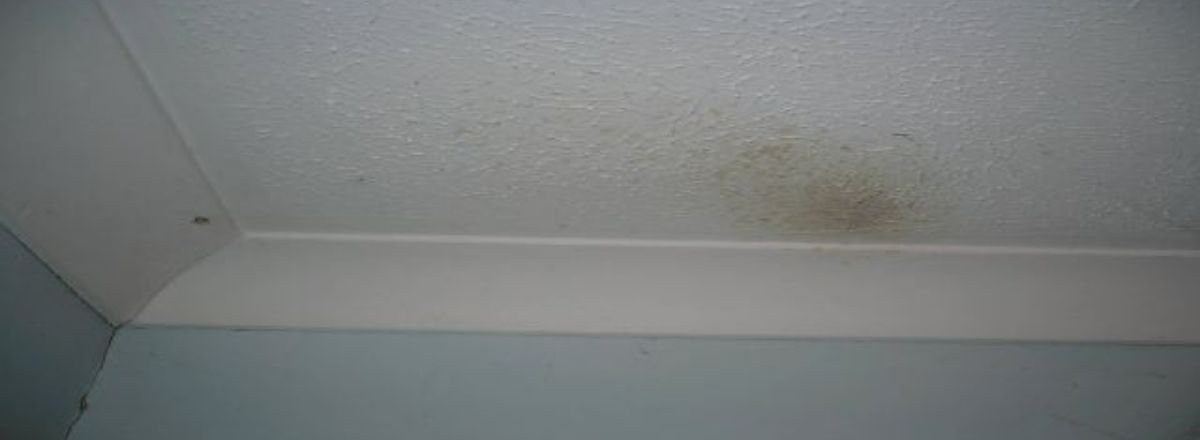
Particles from candles, aerosols and dust can form on surfaces, and may look similar to mould.
Preventing Damp and Mould when Insulating your Loft
Incorrectly installed insulation can often cause damp and mould problems in loft spaces. This is because the insulation can block natural airways, preventing air circulation, meaning that moisture laden air can become trapped.
If insulation is piled up or laid too deep at the edges, it can block eaves ventilation or gable air bricks. Specially designed extendable eaves vents are now available to prevent this issue.
Damp and mould problems can also form on loft hatches, as heat rises the moisture flows into the loft space, condensing on the cold surface.
To prevent a damp and mould problem it is essential to make sure the loft hatch is closed at all times and insulated properly.
Sometimes downlights are installed without protective covers that prevent moisture escaping into the loft, and bathroom extract vents are discharged into the loft rather than outside.
Loft Insulation and Loft Boarding
When carrying out a damp and timber survey of a property, a Peter Cox surveyor may recommend insulation be topped up to decrease heat loss, remove cold spots and prevent condensation forming.
Our Operatives will install a new loft boarding system to designated areas, this can be installed over existing insulation or in conjunction with our top up service.
Plastic legs, specifically designed for this purpose, will be securely fixed to the ceiling joists at a height dependent on the required insulation thickness so as to prevent compression of the insulation material. Compressed insulation is not as energy efficient as uncompressed insulation.
Chipboard loft boarding panels are then securely fixed to the loft leg system to complete your storage solution system.
It should be noted that this system is designed for light domestic storage only at a maximum loading of 25kg per square metre.

The Installation of a Loft Boarding System.
Contact Peter Cox about Loft Insulation
Peter Cox are well known as damp and timber experts this makes us ideal to provide insulation solutions as part of the works we are already doing at your property that consider the complete environment of the loft space.
Give us a call to find out how we can help with loft insulation for your property, or fill in the form below and one of our team will get back to you.” also the image above this is missing can you add this back in please?
Contact Us
Next Steps
*Survey enquiries for your local branch will be directed to our dedicated central survey control teams across the UK. Calls to 0800 and 0808 numbers are free unless you are calling from a business phone, in which case the rate will be set by your provider.