
Call Peter Cox on 08082508820 * or Contact Us Online
Below Ground Waterproofing - A Guide
If you are thinking of waterproofing your property there are lots of things to consider, and you may be wondering where to start. We have put together a comprehensive guide on when you might need below ground waterproofing, the types of waterproofing and the regulations that need to be considered when designing and installing waterproofing systems.
If you wish to go ahead with below ground waterproofing, whether its a wall affected by high external ground levels, or a below ground space such as a basement or cellar, you should use a company with the right credentials and experience. Peter Cox have been carrying out below ground waterproofing for decades, with qualified surveyors and technicians working out of a network of branches, meaning we have specialists local to you.
We can provide advice and recommendations from the initial on site survey, to designing a system fit for purpose and through to installation. Our systems are designed to British Standards 8102 - the industry standard for below ground waterproofing in the UK.
What is Waterproofing?
Waterproofing is the process of making a structure water resistant by applying special coatings, barriers or techniques to prevent moisture penetration. This will prevent water damage from moisture ingress from outside the property, either from groundwater, rain or flooding. This therefore stops leaks and damp from affecting the internal space that has been waterproofed, allowing for a habitable dry environment. Waterproofing can be used in specific areas affected by lateral penetrating damp caused by high ground levels, or full systems can be used for below ground spaces such as basements and cellars.
Waterproofing a below ground space can add significant value to your property by creating a new habitable part of the property, perfect for a home gym, home office or extra storage.
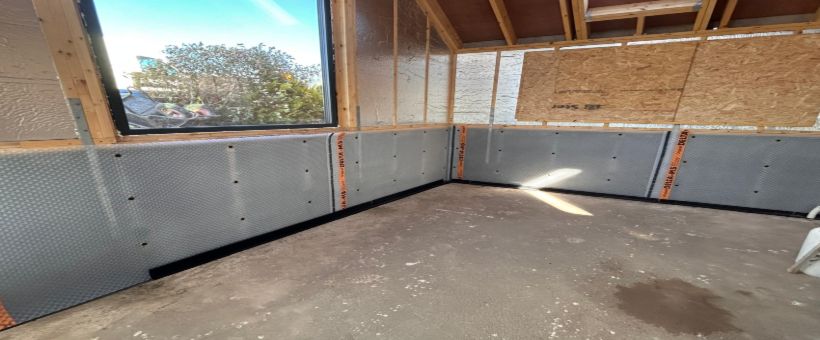
Waterproofing walls will prevent moisture penetration caused by high external ground levels, such as buildings built on slopes or hillsides.
What is Lateral Penetrating Damp?
Lateral damp penetration is the horizontal movement of water or moisture into a building’s structure from the outside. It will affect walls, basements, cellars, vaults and other spaces that have external high ground levels, or are completely below ground. Lateral moisture can move from the surrounding ground and through the structure itself.
It can cause damp and mould growth internally, leading to an unhealthy living environment and can even cause structural issues such as woodworm infestations or fungal decay.
As long as external ground levels are higher than the internal floor levels, there is a route for moisture to ingress inside the property. This can be prevented by using specialist waterproofing techniques which should extend to at least 2 bricks or 150mm above external ground levels, therefore transforming basements, cellars and vaults into dry and habitable spaces.
Where is Waterproofing Used?
Waterproofing is used to make a structure impermeable to moisture ingress, so is often used for underground structures, but not necessarily all the time. In the UK there are many above ground properties built into slopes or on hillsides which require waterproofing. Waterproofing can also be used to prevent moisture ingress from above structures, often through a podium deck, like car parks, plazas and roof tops.
Common areas requiring waterproofing include:
- Basement and cellar waterproofing
- Below ground vaults
- Retaining walls
- Car parks
- Rooftop terraces
- Tunnels
- Commercial Infrastructure
- Plant rooms
- Balconies
- Podium decking
Waterproofing Process
If you are considering waterproofing a below ground space, there are numerous options available, so it is important to work with a professional to fully understand the best waterproofing system appropriate for your property and intended end use.
The Waterproofing Process will Typically Involve:
-
Waterproofing Survey: - The first step is a waterproofing survey from a CSSW (Certificated Surveyor in Structural Waterproofing) qualified surveyor who will be able to provide specialist advice specific for your below ground space and intended end use.
They will visit your property and examine the problem, compiling a survey report with a basement design tailored specifically for your needs. -
Design Factors: - When designing your waterproofing system, the CSSW qualified surveyor will follow regulations such as British Standard 8102, NHBC Chapter 5.4, LABC Technical manual, Premier Guarantee Technical Manual and best practices to provide a system fit for purpose.
-
Waterproofing Installation: - If you choose to go ahead, our expert technicians will install the basement waterproofing system to the specification detailed in the survey report, implementing a barrier against water ingress and creating a dry and habitable environment. This is backed by a quality assurance process that ensures all steps are completed to the highest standard and to manufacturers guidelines. This provides long term peace of mind for our customers.
-
Drainage: - Where drained protection has been recommended, drainage channels are used to ensure water is removed safely. This can either be gravity drained or discharged via sump pumps.
-
Finishing: - To finish your basement we can provide flooring and plasterboard linings, ready for your new habitable space to be decorated. Improvements to heating and ventilation may also be required, depending on end use.
-
Protected Long Term: - All Installations carried out by Peter Cox that comply with BS8102 standards carry a 10-year guarantee, meaning your investment is protected long term.
Waterproofing Regulations
If you are thinking about waterproofing a below ground space in your property, you need to choose a system fit for purpose. There are a number of ways to waterproof a building, but if you’re considering a basement conversion in your property, you should always deal with a professional company who will conduct a thorough survey before designing and installing the system to British Standard 8102 standards.
BS 8102 provides recommendations and guidance in dealing with moisture ingress into a below ground space.
Types of Below Ground Waterproofing
Peter Cox will design and install a waterproofing system to BS 8102 guidelines, made up of a combination of Type A (barrier protection), Type B (structurally integral) and Type C (cavity drained) waterproofing methods, or a combination of them.
All our waterproofing is carried out by trained and experienced technicians.
Peter Cox are approved installers of Delta, Koster, Safeguard and Newton waterproofing products. We undertake quality assurance checks from the design stage, throughout the installation and onto completion of all projects we are involved with. Where drained protection is utilised and a sump pump is recommended, we also ensure this is commissioned and signed off by an independent third party to ensure it is functioning as designed.
Below Ground Tanking
Tanking (also known as Type A systems) is most commonly used to create a waterproof barrier directly onto walls and floors, therefore creating a waterproof layer when installed correctly. It is known as barrier protection and usually involves the application of a pre or post applied bitumen, rubber or cement based waterproof layer. Alternatively pre-applied fully bonded sheet barriers can be used. It can be installed either internally or externally, depending on the type of structure and product used.
Cavity Membrane Systems
A cavity drain membrane (CDM) system (known as a Type C system) uses hidden perimeter drainage channels to remove groundwater ingress from the internal environment. Waterproof membranes are installed onto walls and floors which are sealed with waterproof tapes. This traps any moisture and directs it to the installed drainage channels around the perimeter.
Maintainable perimeter drainage channels allow the water to drain away by gravity to a sump chamber or suitable external drainage point if conditions allow. Once installed the system can be plastered and then decorated.
Sump Pumps
Sump pumps are part of a cavity drain membrane system and are designed to handle and remove water from entering the internal space. They are typically protected with high water level alarms and battery backups which can be remotely monitored if required - therefore protecting furnishings and stored items from damage.
Systems can be tailored to the specific needs and designs of a property.
Waterproofing Survey
If you have a damp and leaky below ground space and are considering below ground waterproofing, the first step is to have a waterproofing survey carried out by a CSSW qualified surveyor. They will take the time to discuss your requirements and provide you with advice on the waterproofing process.
Our surveyors will conduct a thorough survey and inspect the below ground space and check the water ingress levels, past history, assess drainage options and any existing waterproofing systems. All our findings will be detailed in a comprehensive survey report, along with a waterproofing system designed to British Standard 8102 unless otherwise stated.
A Peter Cox waterproofing system will fully protect your internal space from water ingress and will be made up of a combination of barrier protection (Type A), integral protection (Type B) and cavity drainage membrane systems (Type C), with all works carried out by our trained and experienced technicians.
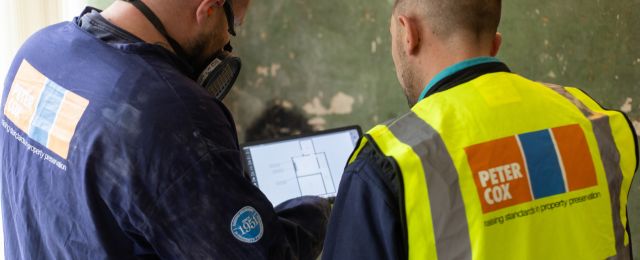
A CSSW qualified surveyor will carry out a waterproofing survey and design a system suited to your requirements
Why Choose Peter Cox for below ground waterproofing?
Peter Cox are the market leaders in property preservation and have branches across the UK. From our network of local branches we have a number of surveyors with the ‘Certificated Surveyor in Structural Waterproofing’ (CSSW) qualification, meaning they have the knowledge and experience to advise on below ground waterproofing.
We can work with homeowners, architects, contractors and builders to design a waterproofing system to suit your needs, helping you step-by-step from design to completion.
Our frontline CSSW qualified surveyors are supported by our national waterproofing division with decades of experience in structural waterproofing and basement conversions. All our waterproofing is carried out by trained and experienced technicians local to you.
- Peter Cox are approved installers of Delta, Koster, Safeguard and Newton waterproofing products.
- We are rated ‘Excellent’ with over 2,500 independent reviews on Trustpilot and are a Which? Trusted Trader.
- We are CHAS and Safecontractor approved and also registered as a Quality Assured Firm under ISO 9001.
- All installations that comply with BS8102 standard carry a 10-year guarantee - giving you long term protection and peace of mind.
Contact Us
Local Waterproofing Specialists
Find your local Peter Cox branch
Next Steps
*Survey enquiries for your local branch will be directed to our dedicated central survey control teams across the UK. Calls to 0800 and 0808 numbers are free unless you are calling from a business phone, in which case the rate will be set by your provider.