Crack Stitching
Find out more

Call Peter Cox on 08082508820 * or Contact Us Online
If you have noticed cracking above windows and doors, your lintels could be damaged and require repairs.
A lintel is used to support the weight of the building above openings such as windows and doors. Lintels can be made from different materials, traditionally they were made out of timber but modern construction methods tend to use steel or concrete.
If cracks or signs of damage appear above a lintel, this could indicate a loss of structural integrity and could be weakened to the point where it could be at risk of collapse.
Repairs can be carried out using lintel reinforcement techniques, but sometimes lintels must be replaced altogether. A survey from a qualified professional will be able to assess the signs of damage and provide recommendations for structural repairs, if required.
If repairs are needed, they will prevent the potential collapse of the external outer masonry, provide resistance against further cracking and restore structural integrity. Professional repairs can be carried out with minimum disruption and provide a long term fix, giving you peace of mind.
Older properties may have lintels that are built using stone or masonry which can degrade over time, especially if exposed to adverse weather conditions such as wind driven rain and frost.
Lintels built using timber or wood can be affected by issues such as woodworm, wet rot or dry rot. It exposed to moisture they can degrade and lose their structual integrity.
Original timber windows were often loadbearing and over time these frames have been replaced with new uPCV windows. These new windows are made from a lighter material which is not capable of bearing the same load. This can lead to more pressure being put onto the lintel causing it to fail.
A soldier course above a window or door is a decorative feature and is often mistaken for a load beearing lintel, which may need strengthening if new windows are installed.
The signs of lintel failure are often very noticeable and do not always require a structural engineer to inspect. A very common sign of lintel failure is diagonal cracks appearing above a door or window which do not extend past the width of the frame. You may also notice the slumping of the intel, or even the bending of the uPCV window frame.
Once the signs of cracks in the masonry appear, it is essential that the root of the problem - the lintel failure - is addressed.
If this is not fixed, the problem can get worse over time and lead to further structural problems and in extreme cases, may make the property unsafe and require a rebuild of the brickwork.
Repairs can be carried out to reinforce the existing lintel or soldier course to prevent the potential collapse of the external outer masonry. This provides strength to the structure and prevents further cracking or damage. Elements of crack stitching may also be required.
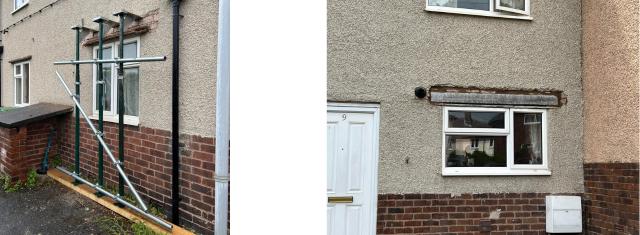
A demonstration of lintel reinforcement for a soldier course above a window or door.
(Above) A demonstration of lintel reinforcement for a soldier course above a window or door
Sometimes lintels are past the point of repair and will need to be replaced. There are various options available depending on the structure and aesthetics of a building. Peter Cox often install timber lintels, metal lintels or concrete lintels to match the architecture of the property.
(Left) Before - A masonry lintel that had failed and needed to be replaced (Right) After - A new concrete lintel is installed.
If you are worried about a lintel problem affecting your property, get in touch with Peter Cox to arrange a survey to assess the options and give you advice and recommendations.
Peter Cox are approved installers of Helfix and Cintec structural products and have considerable experience of working with structural engineers across the country. The surveyor will take time to explain any repairs required, and answer any questions you may have. They will also take time to identify other property issues such as damp, timber decay, woodworm that may be causing underlying issues.
A lintel is a horizontal structural beam that spans across an opening such as a window or door. They are a load bearing element used to prevent the wall from collapsing and can be made from different materials such as concrete, stone, metal and timber. They can be hidden behind render but are often used as an architectural feature, especially in period or listed properties.
Yes, a lintel can be replaced if they are structurally compromised, which can happen if lintels crack or become weakened due to timber decay. The repair process will include supporting the brickwork above the lintel as it is removed and replaced. Sometimes firther structural repairs are required for horizontal cracking above the lintel.
Yes, if left it can lead to further deterioration and structural damage, if the brickwork above is no longer supported.
A structural engineer is not required for simple lintel replacements, but you should use a company that has experience and expertise in carrying out these types of repairs.
This will depend on the extent of the damage, size of the opening and the type of lintel replacement required. Often further remedial work such as crack stitching is required. For a better understanding of costs it is advised to have a surveyor assess the problem and provide a detailed survey report.
There are many types of lintels, as buildings throughout the UK have used different types over the years. That said, the most common types are timber lintels, steel lintels, brick lintels or concrete lintels.
Although some may consider lintel replacement as a significant job due to the importance of structural repairs, Peter Cox are experienced in carrying out this type of work and can carry out repairs with minimal disruption. From a thorough survey to organising the repairs, Peter Cox are able to give you peace of mind that comes with using a company with decades of experience in the property preservation industry
*Survey enquiries for your local branch will be directed to our dedicated central survey control teams across the UK. Calls to 0800 and 0808 numbers are free unless you are calling from a business phone, in which case the rate will be set by your provider.