
Call Peter Cox on 08082508820 * or Contact Us Online
Structural Waterproofing Guidance and Advice
Structural waterproofing is essential to protect below ground spaces from moisture ingress and water damage. Peter Cox can provide advice for a basement or cellar conversion, a new build project or structural waterproofing of commercial or historic properties. This means it's essential to choose a waterproofing system that offers full protection, and that is installed correctly by trained professionals.
Peter Cox has CSSW (Certificated Surveyor in Structural Waterproofing) qualified surveyors who will tailor the waterproof design and installation process to suit your needs, offering robust systems designed to the industry standard for waterproofing, British Standard 8102.
What is Structural Waterproofing?
Structural waterproofing is the process of making a structure or building watertight, and is commonly used for below ground spaces where moisture can penetrate through walls and floors. Where buildings have earth retaining walls it is essential to carry out structural waterproofing to ensure a dry and habitable internal environment. It can be used on existing below ground structures like basements, cellars and vaults, new build properties that are designed with earth retaining walls, and other areas that may be affected by moisture ingress like lift pits, podium decks, car parks and garages.
There are different techniques to carry out structural waterproofing, but it is essential to follow the guidance of British Standard 8102, the industry standard for preventing moisture ingress by designing and installing robust waterproofing systems. Systems designed to BS8102 will prevent moisture ingress and provide a dry and habitable internal environment while increasing the value of the property.
Structural waterproofing differs from ‘damp proofing’ which typically refers to moisture ingress above ground level, typically where the building’s damp proof course is installed. Structural waterproofing addresses water penetration to below ground structures and must deal with problems such as hydrostatic pressure and lateral damp penetration.
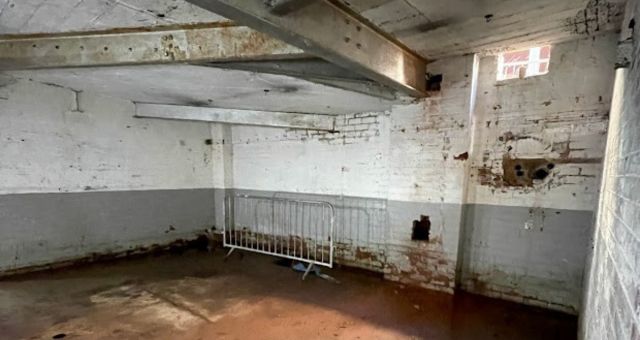
Structural waterproofing can be used to prevent moisture ingress in below ground spaces, turning them into dry and habitable environments.
Structural Waterproofing - Designing a System
Structural waterproofing is a critical element in the design and construction of below-ground structures in order to prevent water damage. There are a number of ways to waterproof a building, but if you’re considering a basement conversion in your property, you should always deal with a professional company who will design and install the system to British Standard 8102 standards.
A CSSW (Certificated Surveyor in Structural Waterproofing) qualified surveyor will carry out a comprehensive survey and design a system to adhere to the industry standards and guidelines - including British Standard 8102. British Standard 8102 (Protection of Below Ground Structures Against Water Ingress - Code of Practice) is the predominant document for design of basement waterproofing in the UK, with different grades of protection depending on the end use of the below ground space.
When designing a system it is important to take into consideration the form of the structure, the end use for the internal space, and the level of risk involved. BS8102 advises that in most cases for habitable end use, two types of waterproofing should be used to achieve the desired grade of waterproofing. This means that most structural waterproofing projects will use a combination of Type A (barrier), Type B (structurally integral) or Type C (drained) protection.
Peter Cox will work closely with you to provide a structural waterproofing system to suit your needs, in accordance with current legislation and best practice.
Types of Structural Waterproofing for Below Ground Spaces
There are three primary types of structural waterproofing systems, each with its own benefits and applications. Where conditions dictate according to BS8102, two or more systems can be combined to achieve the desired grade of waterproofing.
Type A - Barrier Protection (Tanking)
Type A barrier protection waterproofing is sometimes known as tanking, and is essentially undertaken using a waterproof material to provide a barrier to water ingress. The main aim of a Type A waterproofing system is to lock down structures to keep the space it is applied to dry.
The most common method is an application of a waterproof material directly onto walls and floors, with cementitious renders used internally, or fully bonded membranes, bitumen, rubber or plastic membranes used externally. This will depend on the type of structure.
Typical spaces that would use Type A Waterproofing include:
- New build basements
- Basement and cellar conversions
- Storage or utility rooms
- Underground car parks
- Earth retaining walls
- Swimming pools
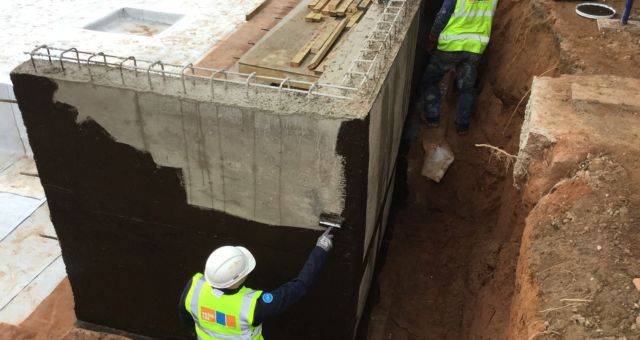
Type A barrier protection can be applied internally or externally and can be applied as a bitumen coating, tanking slurry or a plastic sheet barrier.
Type B - Structurally Integral Protection
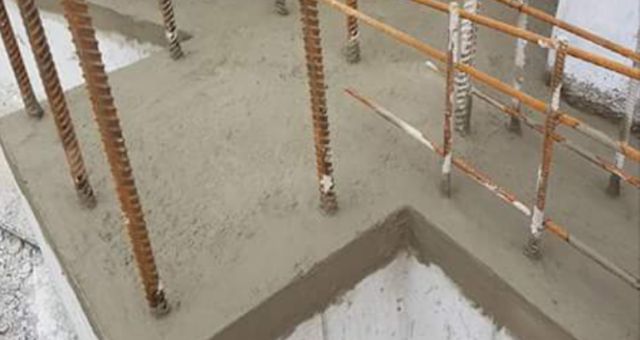
Type B - Structurally Integral Protection relies on the structure itself to resist water penetration. This can be achieved through the use of watertight concrete, incorporating watertight construction techniques, or by adding admixtures to the concrete mix.
This type of structural waterproofing is typically used for new builds, as the structure itself is constructed to be an integral water-resistant shell.
Type C - Drained Protection (Cavity Membrane Systems)
Type C waterproofing refers to waterproofing systems that manage water ingress. Instead of holding back moisture pressure, they are designed to allow it to seep in slowly, depressurise it and manage the water away from the structure. Type C systems will use a combination of wall and floor membranes and basement floor drainage channels that manoeuvres moisture to a sump pump, which will then remove it from the below ground space.
Type C waterproofing systems are often regarded as the fail safe of the industry. They can be used in new build properties, basement conversions and historic buildings. They would usually be applied to spaces that have no waterproofing systems in place or have a failed Type A or Type B systems. Examples include:
- Basement conversions
- Cellar conversions
- Car parks
- Utility rooms
- Garages
- Earth retaining walls
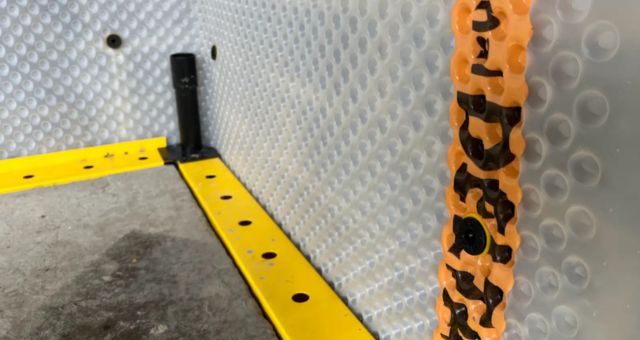
Membranes are applied to walls and floors which will divert water to drainage channels, protecting the internal space.
Structural Waterproofing Survey
If you are considering structural waterproofing, you should use a reputable company and a CSSW qualified surveyor, who will be able to provide advice and recommendations. A CSSW qualified surveyor will take their time to fully understand your requirements, and carry out a full site assessment.
Their findings will be detailed in a survey report, along with a specification for a structural waterproofing system designed to BS8102. Our systems are designed to fully protect your internal space, and will be made up of a combination of Type A (barrier protection), Type B (structurally integral) and Type C (drained protection) waterproofing methods, with all works carried out by our trained and experienced technicians. The surveyor will also assess the need for improvements to ventilation for the below ground space, if required.
Details of the long term guarantee will also be found in the survey report, if applicable. Whether you want some advice for an existing below ground space, or you’re designing a new build project, get in touch with Peter Cox at the earliest opportunity for a thorough basement survey carried out by a CSSW qualified surveyor.
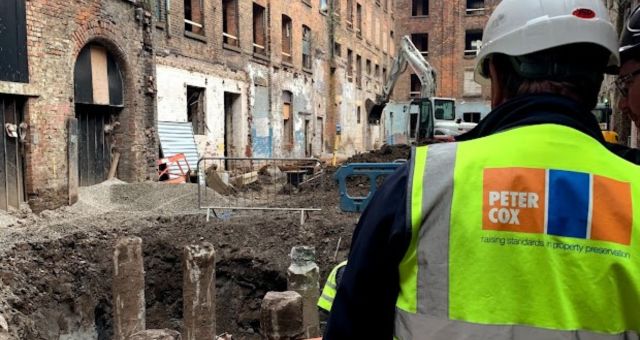
Structural Waterproofing for Listed and Historic Buildings
Many historic and listed properties do not benefit from modern forms of protection from moisture ingress, leading to damp, flooding and moisture ingress.
When carrying out structural waterproofing, Peter Cox will use a sympathetic approach, respecting the original structure and fabric of the building. Type C systems are ideally suited for these types of properties given their reversible nature - a CSSW qualified surveyor will be able to discuss with you options for your project. Peter Cox has carried out thousands of structural waterproofing projects across the UK since 1951.
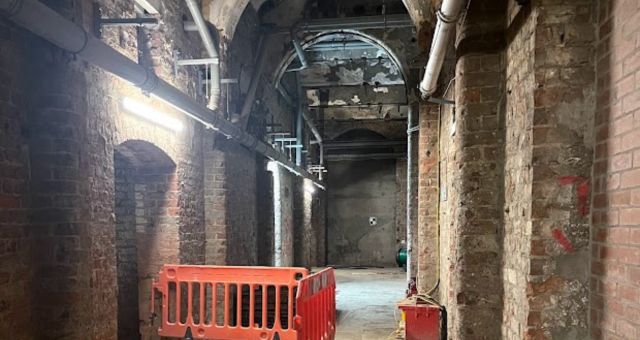
Peter Cox has vast experience in carrying out structural waterproofing in historic properties across the UK
Why Choose Peter Cox for Structural Waterproofing?
Peter Cox are the market leaders in property preservation and have branches across the UK. From our network of local branches we have a number of CSSW qualified surveyors with the knowledge and experience to advise on all types of structural waterproofing.
No matter what type of project, we can work with homeowners, architects, contractors and builders to design a bespoke structural waterproofing system to suit your needs. We will be involved throughout the process step-by-step, from design to completion. Our frontline CSSW qualified surveyors are supported by our national waterproofing division with decades of experience in structural waterproofing and basement conversions.
All our waterproofing is carried out by trained and experienced technicians local to you.
- Peter Cox are approved installers of Delta, Koster, Safeguard and Newton waterproofing products.
- We are rated ‘Excellent’ with over 2,500 independent reviews on Trustpilot and are a Which? Trusted Trader, CHAS and Safecontractor approved and are also a Quality Assured Firm under ISO 9001.
- All installations that comply with BS8102 standard carry a 10-year guarantee - giving you long term protection and peace of mind.
Next Steps
*Survey enquiries for your local branch will be directed to our dedicated central survey control teams across the UK. Calls to 0800 and 0808 numbers are free unless you are calling from a business phone, in which case the rate will be set by your provider.